
Spices & Agricultural Products
Pick a spice and a form — origin, HS code and uses.
Every spice, traced to its region.
- Byadgi ChilliByadgi · Karnataka
- Black PepperChikmagalur · Coorg · Wayanad · Idukki
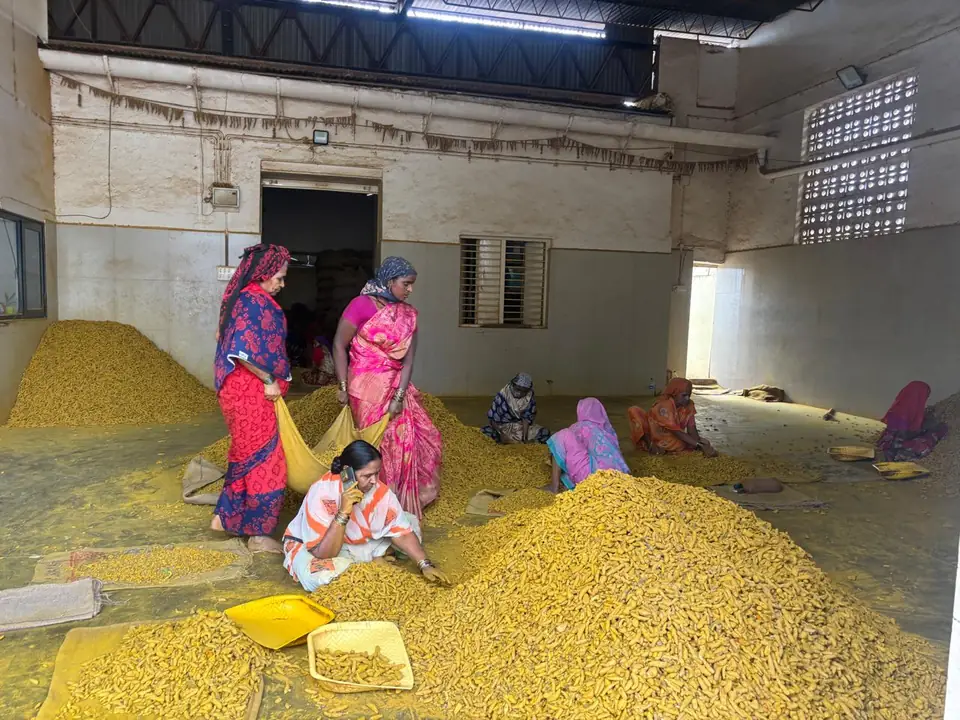
- TurmericErode · Sangli
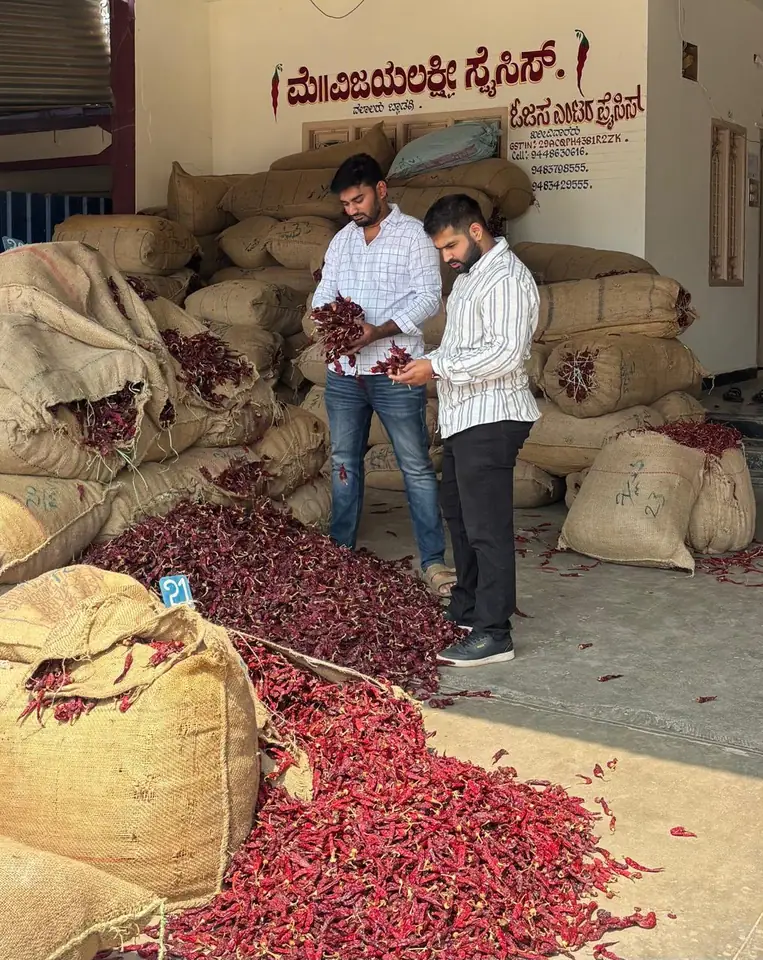
Byadgi Chilli
Deep natural red colour, mild-to-moderate heat.
Whole Dried Byadgi Chilli
Whole dried Byadgi chilli is the intact, dried pod of the Byadgi chilli associated with the Byadgi region of Karnataka, India.
Uses
Full details
It is recognised for its deep natural red colour and relatively mild-to-moderate heat compared with many high-pungency chilli varieties.
The dried pods retain the characteristic wrinkled skin and elongated appearance of the chilli. Byadgi chilli is especially valued where strong visual colour is desired without relying entirely on very high heat.
We present it as carefully selected whole pods, with options such as stemmed or stemless material according to the agreed buyer specification. Kaddi and Dabbi — the two important Byadgi types — can be offered separately when a buyer needs a specific physical form, colour profile or pungency level.
Fruits of the genus Capsicum or Pimenta – dried, neither crushed nor ground; of genus Capsicum.
Key points
- Product form: whole dried chilli
- HS code: 09042110
- Origin: Byadgi, Haveri district, Karnataka, India
- Natural red colour and controlled pungency are the key characteristics
- Final grade and quality parameters confirmed for each lot / COA
Specification points
- Natural red colour with controlled pungency
- Whole pods: stemmed or stemless, as agreed
- Kaddi and Dabbi types offered separately
- Powder: ASTA colour, SHU, moisture and mesh
- Microbiological, pesticide-residue and aflatoxin parameters per grade and COA
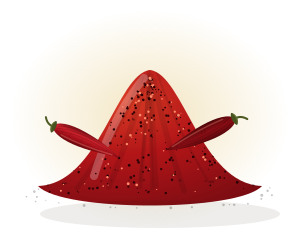
Byadgi Chilli Powder
Byadgi Chilli Powder is the finely ground form of selected dried Byadgi chillies.
Uses
Full details
It is valued for its vibrant natural red colour, characteristic chilli aroma and comparatively controlled heat — useful when a product needs colour and flavour without excessive pungency.
The powder can be produced to a buyer-agreed mesh size and pungency/colour profile. Depending on the selected Byadgi material, the finished powder can be positioned for colour-focused applications or for a balanced colour-and-heat profile.
It is supplied as a clean, uniform powder with controlled moisture, appropriate particle size and batch-wise analytical documentation where required. Specifications such as ASTA colour, SHU, moisture, microbiological parameters, pesticide residues and aflatoxins are stated only according to the actual grade and COA.
Fruits of the genus Capsicum or Pimenta – crushed or ground; of genus Capsicum: Chilli Powder.
Key points
- Product form: ground / powder
- HS code: 09042211
- Origin: Byadgi, Haveri district, Karnataka, India
- Typical commercial variables: ASTA colour, SHU, moisture and mesh
- Buyer-specific specifications and COA determine the final commercial grade
Specification points
- Natural red colour with controlled pungency
- Whole pods: stemmed or stemless, as agreed
- Kaddi and Dabbi types offered separately
- Powder: ASTA colour, SHU, moisture and mesh
- Microbiological, pesticide-residue and aflatoxin parameters per grade and COA
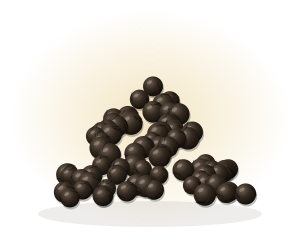
Black Pepper
Sharp, warm and aromatic — cleaned and graded per lot.
Whole Black Pepper – Garbled
Garbled black pepper refers to whole dried black peppercorns that have undergone cleaning and sorting to remove undesirable material and improve uniformity.
Uses
Full details
The peppercorns are the dried berries of Piper nigrum, with a dark, wrinkled exterior and a characteristic sharp, warm and aromatic flavour.
Whole pepper is valued by spice traders, food manufacturers and processors because it can be supplied as a whole spice, ground later to the buyer’s preferred granulation, or used in seasonings and food preparations.
Under HS 09041130 the commercial description is “garbled” black pepper — the specific Indian tariff description. Grade, density, size, moisture and cleanliness are confirmed according to the actual lot.
Pepper of the genus Piper – neither crushed nor ground; black pepper, garbled.
Key points
- Botanical source: Piper nigrum
- Product form: whole, dried peppercorns
- HS code: 09041130
- Origin: Coorg and Chikmagalur (Karnataka), Wayanad and Idukki (Kerala), India
- Commercial grade specifies the agreed quality parameters
- Can be supplied for buyer-side grinding or further processing
Specification points
- Whole garbled: grade, density, size, moisture and cleanliness per lot
- Cleaned and sorted to remove undesirable material
- Ground: granulation from coarse cracked to fine powder
- Final mesh and analytical requirements confirmed per order
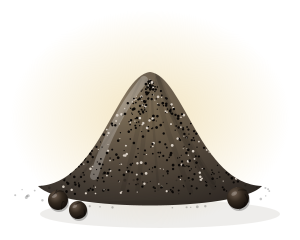
Crushed or Ground Black Pepper
HS 09041200 covers crushed or ground pepper.
Uses
Full details
For this product that means ground black pepper prepared by grinding dried black peppercorns to the granulation the buyer requires — from coarse cracked pepper to medium and fine powder, depending on the grinding specification.
It delivers the characteristic sharp pepper heat and warm, aromatic flavour of black pepper in a convenient form for food manufacturing and seasoning. Because granulation is an important buyer requirement, particle size is controlled to specification rather than supplied as a generic powder.
Pepper of the genus Piper – crushed or ground.
Granulation range
Key points
- HS code: 09041200
- Origin: Coorg and Chikmagalur (Karnataka), Wayanad and Idukki (Kerala), India
- Product form: crushed / ground black pepper
- Granulation can be buyer-specific
- Natural pepper aroma and sharp heat are the key characteristics
- Final mesh / granulation and analytical requirements confirmed per order
Specification points
- Whole garbled: grade, density, size, moisture and cleanliness per lot
- Cleaned and sorted to remove undesirable material
- Ground: granulation from coarse cracked to fine powder
- Final mesh and analytical requirements confirmed per order
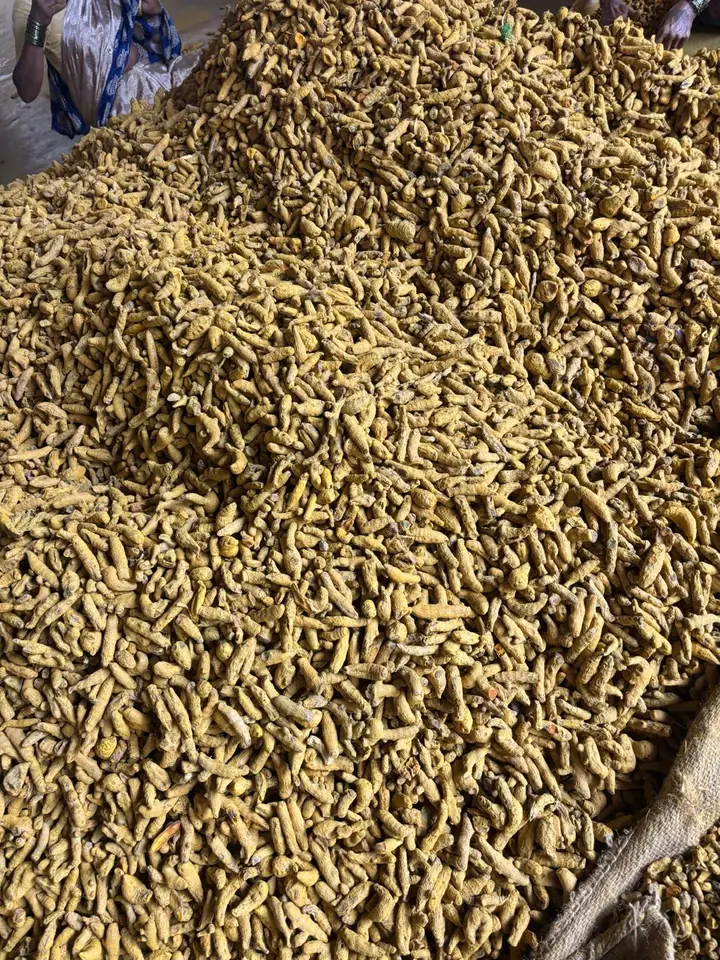
Turmeric
Golden-yellow to orange — fresh, dried fingers or powder.
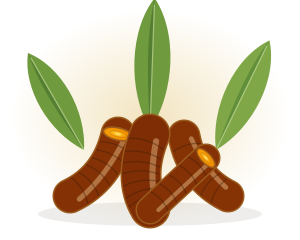
Fresh Turmeric
Fresh turmeric is the unprocessed or minimally handled rhizome of Curcuma longa, the underground stem of the turmeric plant.
Uses
Full details
It has a firm, knobby structure and a yellow-to-orange interior.
Fresh turmeric has a brighter, more pronounced fresh-root character than dried turmeric and is used as a culinary ingredient as well as a raw material for further processing. Because it contains much more moisture than dried turmeric, it is presented as a distinct commercial product from the shelf-stable dried and powdered forms.
Turmeric (Curcuma) – Fresh.
Key points
- Botanical name: Curcuma longa L.
- HS code: 09103010
- Origin: Erode (Tamil Nadu) and Sangli (Maharashtra), India
- Product form: fresh rhizome
- Natural yellow-orange colour
- Fresh and dried turmeric are separate commercial products
Specification points
- Fresh and dried presented as separate commercial products
- Dried: quality depends on variety, curing, drying and handling
- Powder: particle size and curcumin level to buyer requirement
- Golden-yellow to orange appearance, confirmed per lot
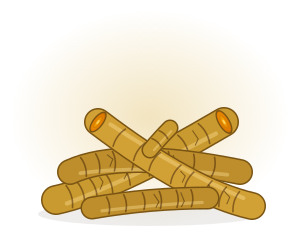
Dried Turmeric
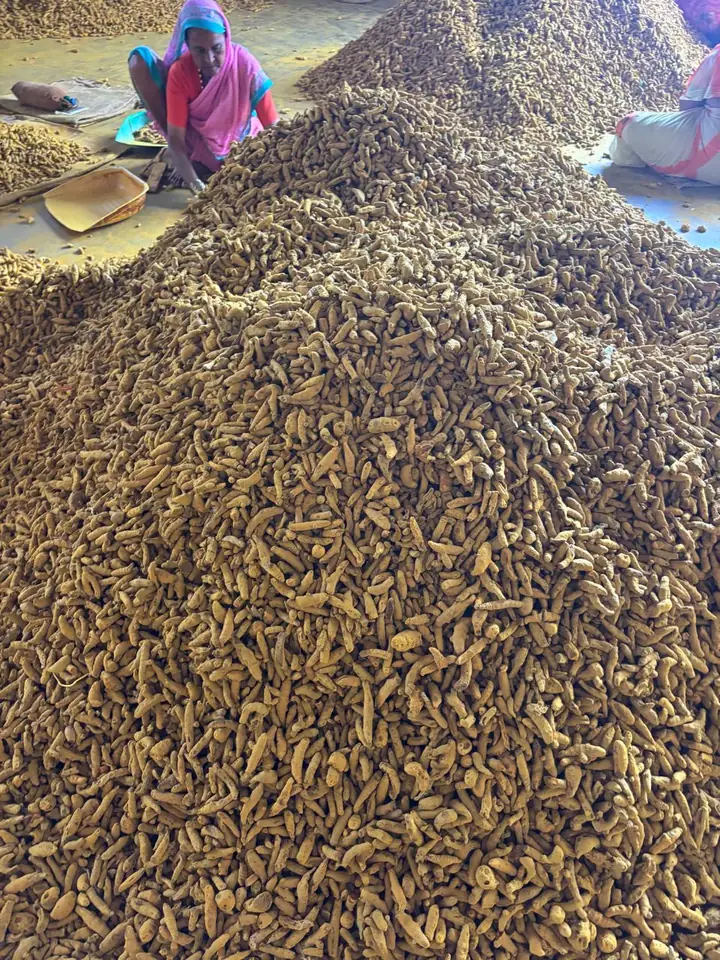
Dried turmeric is turmeric rhizome that has been cleaned and dried into a more stable whole-spice form.
Uses
Full details
It is commonly supplied as whole turmeric fingers or other dried rhizome pieces, with a hard, dry exterior and a strong yellow-orange interior.
It is an important raw material for grinding into turmeric powder and for spice processing, valued for its characteristic colour, aroma and curcuminoid content. The exact quality profile depends on variety, origin, curing and processing — which is why the transformation from fresh rhizome to cleaned, cured and dried turmeric matters: it explains the product’s value and its role as a raw material for further processing.
Turmeric (Curcuma) – Dried.
Key points
- HS code: 09103020
- Origin: Erode (Tamil Nadu) and Sangli (Maharashtra), India
- Product form: dried whole turmeric / rhizome pieces
- Golden-yellow to orange appearance
- Quality depends on variety, curing, drying and handling
- Buyer specifications and COA confirm the commercial grade
Specification points
- Fresh and dried presented as separate commercial products
- Dried: quality depends on variety, curing, drying and handling
- Powder: particle size and curcumin level to buyer requirement
- Golden-yellow to orange appearance, confirmed per lot
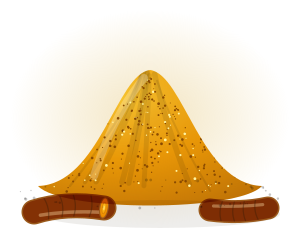
Turmeric Powder
Turmeric powder is the ground form of dried turmeric rhizomes.
Uses
Full details
It is recognised by its bright yellow to golden-orange colour and characteristic earthy aroma and flavour. Curcumin and related curcuminoids contribute to turmeric’s natural yellow colour.
The powder is widely used as a culinary spice, colouring ingredient and food-processing input, and can be supplied in different grades and particle sizes according to application and buyer requirements.
Turmeric (Curcuma) – Powder.
Key points
- HS code: 09103030
- Origin: Erode (Tamil Nadu) and Sangli (Maharashtra), India
- Product form: powder
- Botanical name: Curcuma longa L.
- Bright yellow / golden appearance
- Particle size, curcumin level and other quality parameters can be specified to buyer requirement
Specification points
- Fresh and dried presented as separate commercial products
- Dried: quality depends on variety, curing, drying and handling
- Powder: particle size and curcumin level to buyer requirement
- Golden-yellow to orange appearance, confirmed per lot
Turmeric — from field to golden powder.
One rhizome, three commercial products.
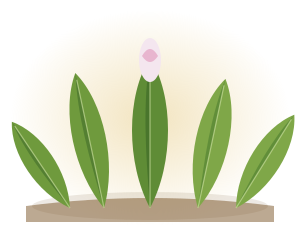
Turmeric field
The valuable part is the underground rhizome.
Fresh rhizome
Higher moisture, bright fresh-root character.
HS 09103010Dried fingers
Cured and dried — shelf-stable whole fingers.
HS 09103020Golden powder
Ground to your particle size.
HS 09103030
Food & industry
Blends, seasonings, colouring, extraction.
Specified per lot. Never generalised.
Parameters we state — per grade & COA
Confirmed for each lot or order.
No colour, purity or adulteration claims that have not been verified for the batch.
Agricultural commodities, on request.
Tell us the commodity, quantity and specification.