

Turmeric Exporter from India
Fresh, dried fingers and powder from Erode and Sangli — curcumin and particle size to your specification.
Turmeric for export
Desai Internationals exports Indian turmeric (Curcuma longa) from Erode in Tamil Nadu and Sangli in Maharashtra — both GI-tagged turmeric origins. We supply fresh turmeric, dried turmeric fingers and turmeric powder, with curcumin level and particle size agreed to the buyer’s requirement and confirmed on a lot-wise certificate of analysis (COA).
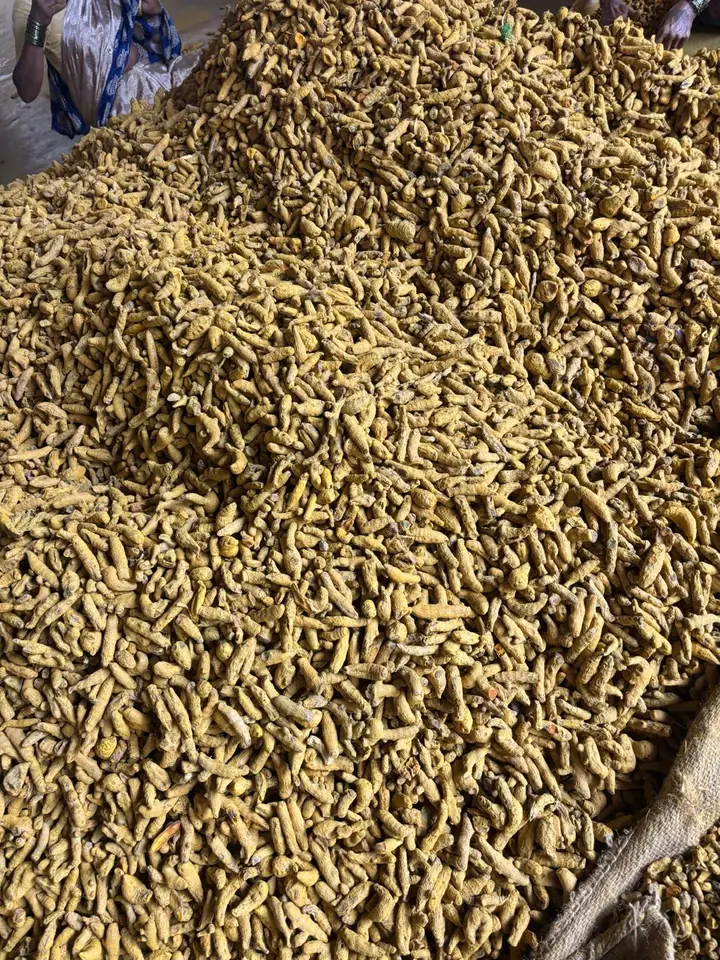
Fresh, dried or powder?
Turmeric is the underground stem (rhizome) of Curcuma longa. One rhizome becomes three commercial products — fresh turmeric, dried turmeric fingers and turmeric powder — each with a different moisture, shelf life and use, so we specify them separately.
Erode and Sangli are both GI-tagged turmeric origins. Typical curcumin content is 2.5–4.5% for Erode and 2.8–4.3% for Sangli turmeric; the level of each lot is confirmed on its COA. Compare curcumin by variety
India produced 73.40% of the world’s turmeric in 2023 and supplied 66.56% of global turmeric exports. Source: ICRIER
Fresh vs dried vs powder
One rhizome, three commercial products.
| Fresh turmeric | Dried fingers | Turmeric powder | |
|---|---|---|---|
| What it is | Unprocessed rhizome | Cleaned, cured and dried whole fingers | Dried turmeric ground to a set particle size |
| Character | Higher moisture, bright fresh-root character | Shelf-stable; hard exterior, yellow-orange interior | Bright yellow to golden-orange, earthy aroma |
| Typical use | Culinary use and further processing | Grinding into powder and spice processing | Food manufacturing, colouring and ingredients |
| HS code | 09103010 | 09103020 | 09103030 |
Forms & HS codes
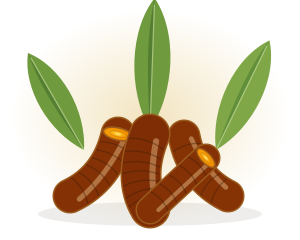
Fresh turmeric
Unprocessed rhizome for culinary use and further processing.
Request a quote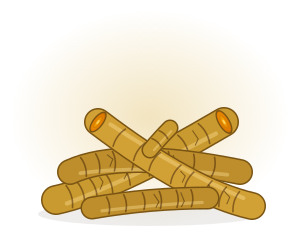
Dried turmeric fingers
Cured and dried, shelf-stable — the raw material for grinding.
Request a quote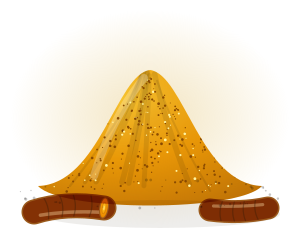
Specified per lot
Agreed before the order and confirmed on the lot’s certificate of analysis (COA).
| Parameter | Why it matters |
|---|---|
| Curcumin content | Colour strength and value |
| Moisture | Shelf life and storage |
| Particle size / mesh (powder) | Texture and dispersion |
| Colour | Golden-yellow to orange appearance |
| Extraneous matter | Cleanliness |
| Microbiology & pesticide residues | Food safety in your market |
| Aflatoxins & ochratoxin A | Food-safety limits in your market |
| Purity | No claim made unless verified for the batch |
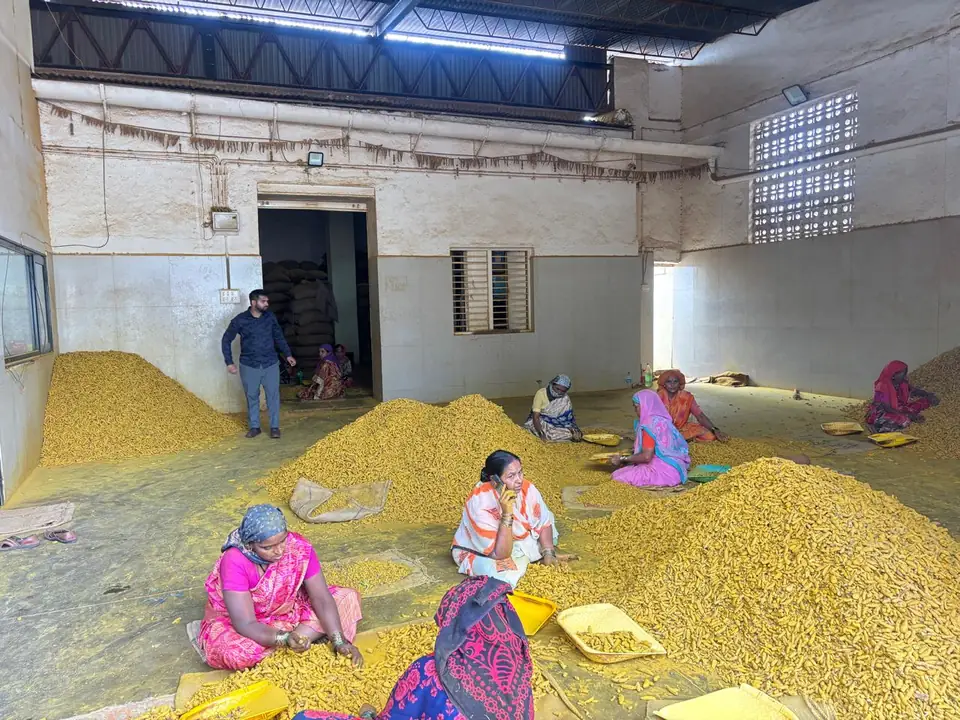
From our warehouse floor
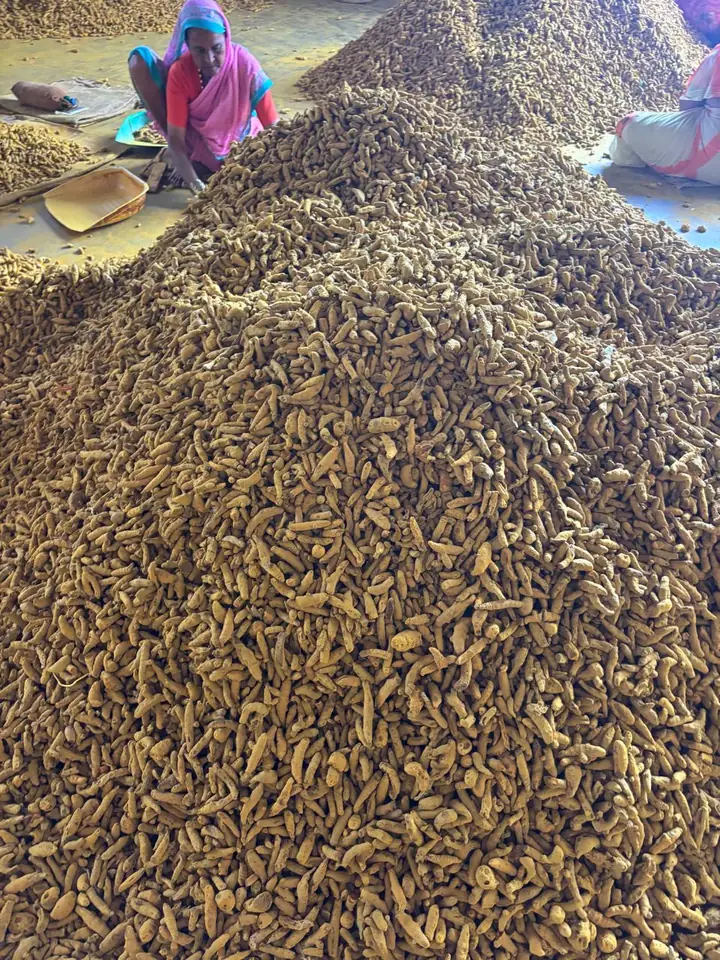
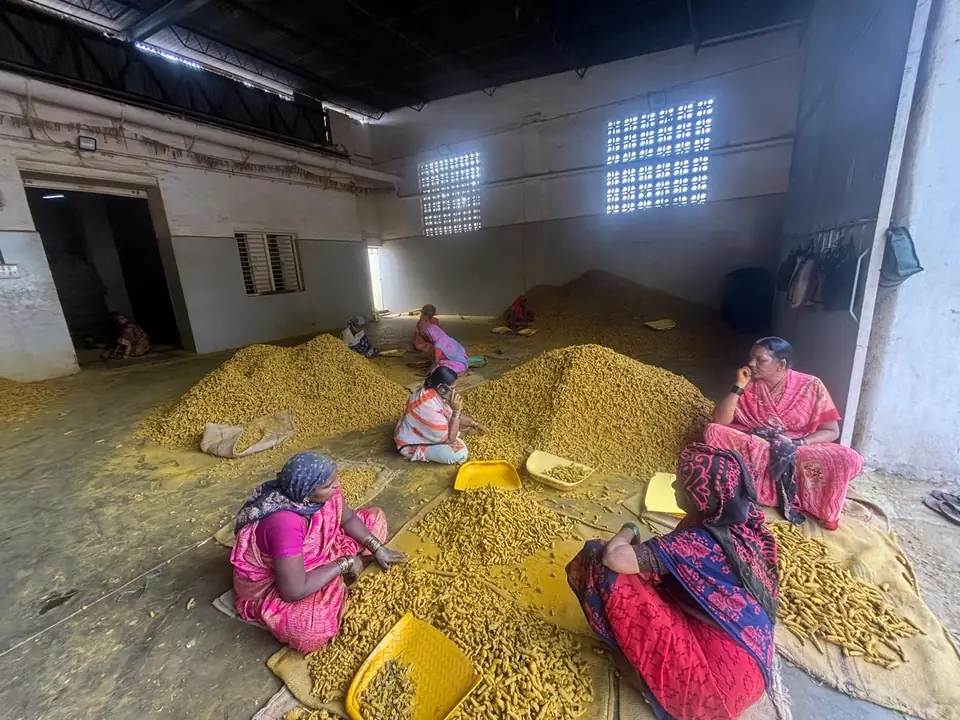
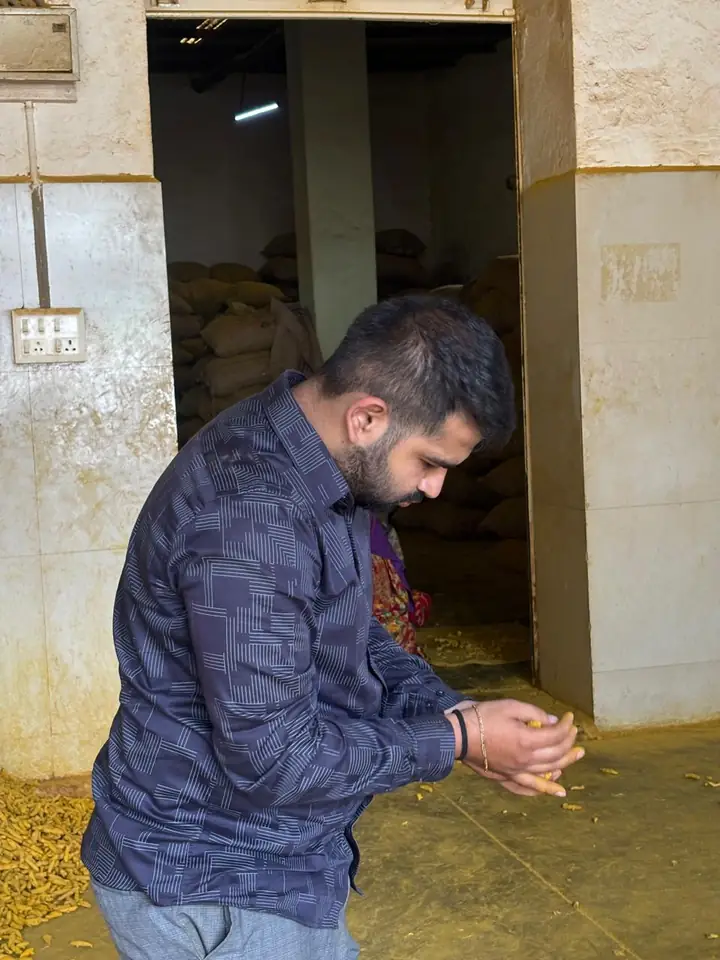
Turmeric questions
Where does your turmeric come from?
From Erode in Tamil Nadu and Sangli in Maharashtra — two of India’s GI-tagged turmeric origins.
What is the curcumin content of Erode and Sangli turmeric?
Typical curcumin content is about 2.5–4.5% for Erode turmeric and 2.8–4.3% for Sangli turmeric (ICRIER). The curcumin level of each lot is confirmed on its certificate of analysis — tell us the level you need.
What is the difference between fresh, dried and powdered turmeric?
Fresh turmeric is the unprocessed rhizome with higher moisture. Dried fingers are cleaned, cured and dried for a long shelf life and are the raw material for grinding. Powder is dried turmeric ground to a set particle size for food manufacturing and colouring.
What are the HS codes for turmeric?
Fresh turmeric 09103010, dried turmeric fingers 09103020 and turmeric powder 09103030 (Indian HS codes).
Why buy turmeric from India?
India produced 73.40% of the world’s turmeric in 2023 and supplied 66.56% of global turmeric exports (ICRIER), and offers distinct origins such as Erode and Sangli.
Can you supply turmeric powder to a specific mesh and curcumin level?
Yes. Particle size and curcumin level are agreed to your requirement and confirmed per lot.
How do I get a quote for turmeric?
Send the form (fresh, dried or powder), origin preference, quantity, destination port and specification through our enquiry form or on WhatsApp at +91 90365 59602. We reply with specifications and terms for your market.